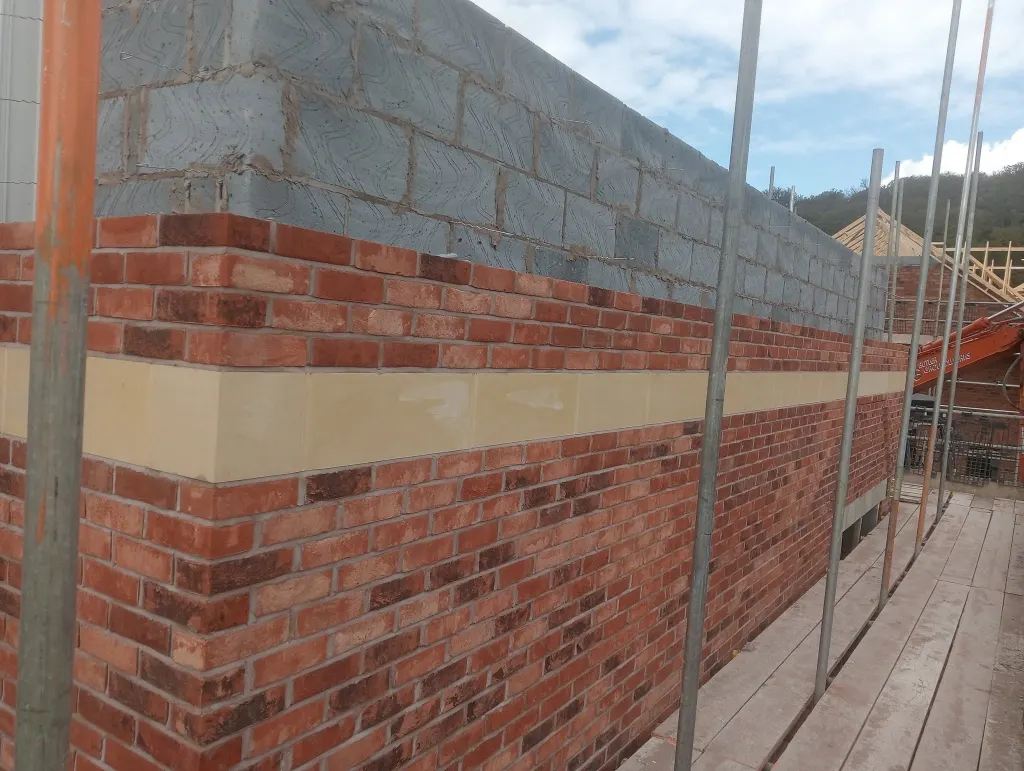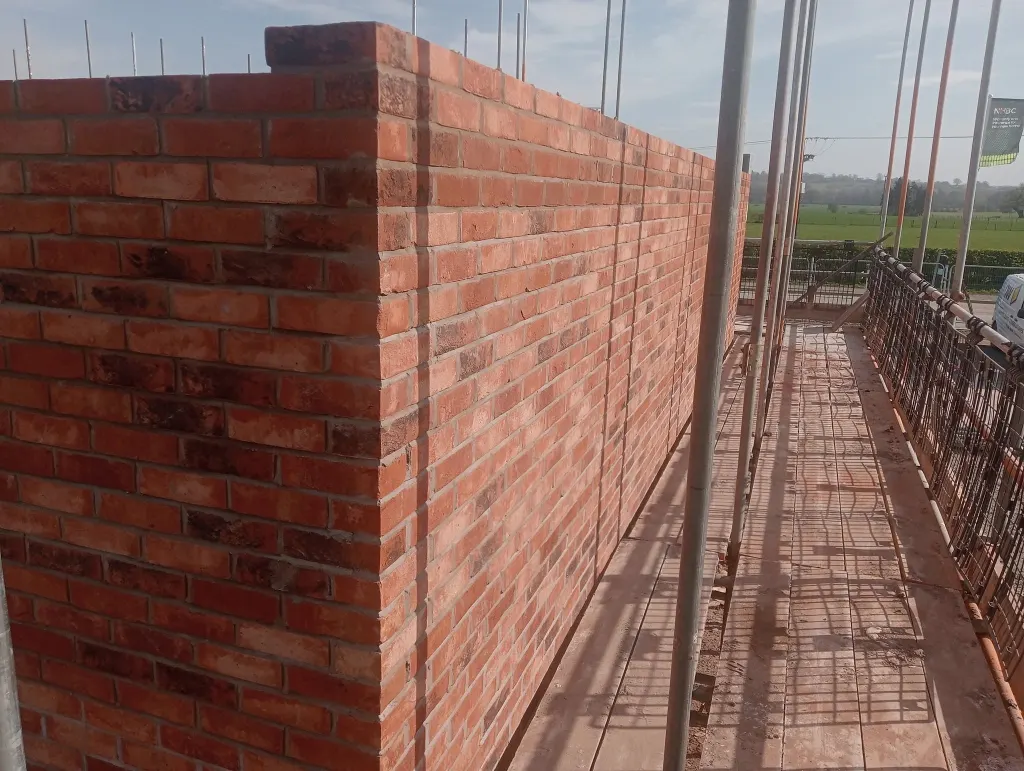
Building work in Powys follows the Building Regulations for Wales and the Welsh Government's Approved Documents, not the English ones. That affects energy performance, fire safety and the details designers draw. KW Brickwork Contractors Ltd is based in Welshpool, Powys, a few miles from the border, and works under both systems. This article explains what changes, and what doesn't, for brickwork.
This is general information, not design or compliance advice. The designer and building control body are responsible for deciding what a particular project needs. We give the source for each point so you can check the current version.
How Wales came to have its own regulations
Building Regulations powers were devolved to the Welsh Government on 31 December 2011. Before that, England and Wales shared one set of regulations and one set of Approved Documents. Since then, each government has amended its own regulations and published its own guidance, and the two have gradually diverged. The Welsh Approved Documents are published on gov.wales. The English ones are on gov.uk.
In practice this means you can't assume a detail or a document that's right in Shrewsbury is right in Welshpool, 20 miles away. For a builder or contractor who normally works in England, the first job in Powys is where it's easy to get caught out.
What actually differs
Energy performance: Part L
The biggest difference for walls is Part L, conservation of fuel and power.
- Wales has its own Approved Document L. The current edition for new dwellings came into force on 23 November 2022, with Welsh-specific targets for new homes.
- England has its own Approved Document L, 2021 edition. It came into force on 15 June 2022, with transitional arrangements for work already under way.
The targets and methods differ between the two, so a house type designed to the English Part L may need changes to meet the Welsh one, and the other way round. For brickwork, Part L shows up in the wall build-up: cavity width, insulation type and thickness, wall ties long enough for the cavity, and thermal bridging details at openings, junctions and floor edges. These are design decisions. The bricklayer builds what's drawn. But when the drawings arrive, it's worth confirming which Part L they were designed to.
Fire safety: sprinklers in new homes
- Wales has required automatic fire suppression systems (sprinklers) in new dwellings since 1 January 2016. That includes houses as well as flats, and dwellings created by conversion.
- England requires sprinklers in new blocks of flats with a storey more than 11 metres above ground, following amendments to Approved Document B that took effect on 26 November 2020. It doesn't require them in new houses generally.
Sprinklers aren't brickwork, but they affect the job. Pipework runs, water supply and tank positions can change where services pass through walls and floors, and the order of work on a house. On a Welsh housing site, expect sprinkler first fix in the programme and allow for it.
Building safety regimes
England's Building Safety Act 2022 introduced a "higher-risk building" regime for buildings at least 18 metres high or with at least seven storeys, and at least two residential units. Their design and construction go through the Building Safety Regulator. Wales is taking its own approach to building safety, so don't assume the English higher-risk regime applies to a building in Powys. For most housing and low-rise work it won't come up either way, but check for taller residential buildings.
What stays the same
Plenty doesn't change at the border. The trade skills are the same. So are the British and European standards for masonry products, and most manufacturers' installation instructions. The NHBC operates in both countries, so on NHBC-registered sites the NHBC Standards apply on both sides of the border, including its guidance on external masonry walls. Good practice doesn't stop at Offa's Dyke either. That covers blending bricks, keeping gauge, protecting new work from frost and building ties and trays in properly.
Practical checks for a Powys site
If you're a contractor or developer bringing a scheme into Powys, especially from England, these are the checks we'd make:
- Which regulations were the drawings designed to? Look for references to the Welsh Approved Documents in the specification and design notes. If you see English Approved Document references on a Welsh site, raise it with the designer.
- Does the wall build-up match the Welsh Part L design? Check cavity width, insulation and tie lengths against the energy calculations.
- Are sprinklers in the programme? On new homes in Wales, they should be.
- Who is the building control body? In Powys it is Powys County Council, or a registered approved inspector. Check they're registered to work in Wales.
- Any local planning constraints? They aren't Building Regulations, but they can affect the programme. In the catchments of phosphate-sensitive river Special Areas of Conservation, including the Wye and Usk, which cover much of south-east Powys, Natural Resources Wales guidance since 2021 has required new development to show it won't add to phosphate levels.
For a bricklaying contractor, the job is to build exactly to the approved drawings and to flag anything that looks inconsistent with the Welsh system before it's built, not after. That's easier when the contractor works in Wales regularly.
The same house on both sides of the border
Housebuilders working across Powys and Shropshire sometimes use the same house type on both sides of the border. It's possible, but the details may need to differ: the wall build-up for Part L, the sprinkler installation in Wales, and potentially other elements. Treat them as two specifications, not one, and make sure each site has the right drawings.
Where to check the current rules
- Welsh Government: Building Regulations guidance and Approved Documents, published on gov.wales
- UK Government: Approved Documents for England, published on gov.uk
- NHBC Standards (for NHBC-registered sites in either country)
- Your building control body
KW Brickwork builds new-build housing and general brickwork across Powys under the Welsh regulations, and across Shropshire and the West Midlands under the English ones. If you're bringing a job into Powys and want a bricklaying contractor who knows both, send Kris the drawings.